
August 31, 2026
What Are the Key Factors Behind Creating a High Quality Slot Game?
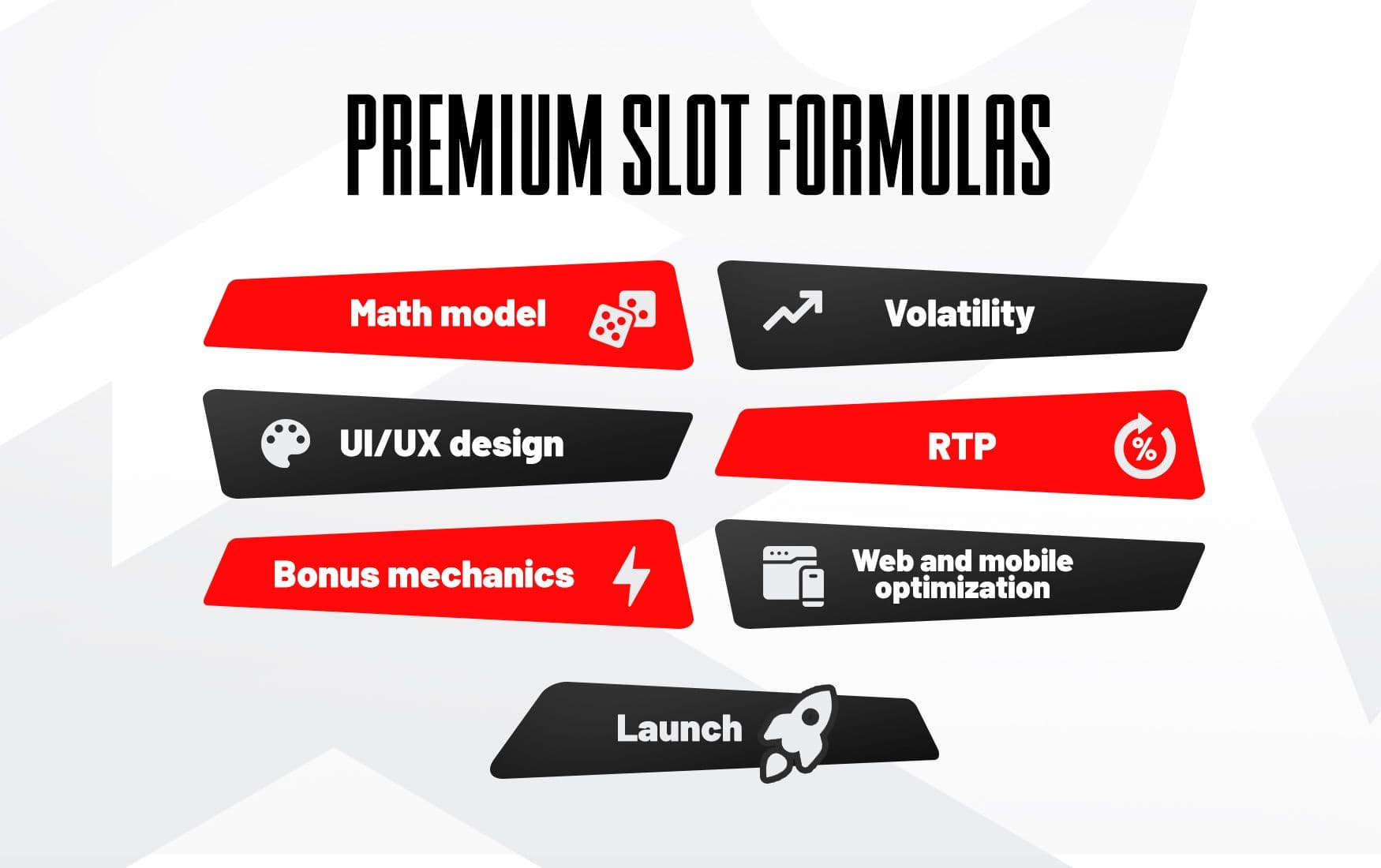
Math Model - The Core of the Game
Every slot game starts with its math model. It is the underlying structure that determines how the game behaves, including how frequently wins occur, how payouts are distributed, and how the balance between risk and reward feels to the player.
The math model has a major influence on the overall gameplay experience. Two slots may look similar on the surface, but different mathematical structures can make them feel completely different to play.
A well-designed model creates a natural rhythm and keeps the experience balanced. If that balance is off, the game can feel either too unrewarding or too predictable.
RTP - Building Trust Through Fairness
Return to Player, or RTP, represents the theoretical percentage of wagered money that a slot is designed to return to players over a very large number of spins.
For example, a slot with 96% RTP means that, in the long run, 96% of all bets are paid back as winnings. This does not determine the outcome of an individual spin or playing session, but it helps establish the game’s long-term payout profile.
RTP is an important part of both game design and commercial strategy. Different operators and markets may have different expectations, which is why providers often need to consider how RTP fits the target audience and overall product positioning.
Volatility - Defining the Risk and Reward Pattern
Volatility, sometimes referred to as variance, works alongside RTP but describes something different. It indicates how wins are distributed throughout gameplay and how large those wins are likely to be.
Low-volatility games generally offer smaller but more frequent wins. High-volatility games tend to produce wins less frequently, with the possibility of larger payouts when they occur.
Neither approach is inherently better. The right level of volatility depends on the game concept, mechanics, and intended player experience.
For example, a straightforward slot built around frequent interaction may benefit from lower or medium volatility, while a feature-heavy game centered around significant win potential may work better with a higher-volatility structure.
Bonus Mechanics - Adding Depth to Gameplay
Bonus features are often among the most memorable parts of a slot. Free spins, multipliers, expanding wilds, bonus rounds, and special symbols interrupt the standard spin cycle and introduce additional variety and anticipation.
But bonus mechanics should do more than simply add features to the game. They need to fit naturally into the core gameplay and support the overall mathematical and visual concept.
Frequency is also important. If bonuses are extremely difficult to reach, the game can begin to feel repetitive. If they appear too frequently, they may lose their sense of significance. Trigger frequency, reward potential, and feature complexity all need to work together.
These principles are also reflected in Rhinoplay slot games, where different mechanics, bonus features, and visual concepts shape the gameplay experience of each title.
UX/UI Design - Making Gameplay Intuitive
Even a strong mathematical model can be undermined by poor usability. Players should be able to understand and navigate the game quickly, without unnecessary confusion.
Good UX/UI design includes clear controls, readable information, intuitive navigation, and easy access to essential actions such as spin, autoplay, and bet adjustment.
Visual design is equally important, but clarity should remain a priority. Overcrowded screens, confusing symbols, or unclear controls can distract from the gameplay regardless of how polished the artwork is.
A well-designed slot should feel intuitive from the first spin, allowing players to focus on the game rather than figuring out how to use it.
Web and Mobile Optimization - Performance Is Part of the Experience
Slot games are played across a wide range of devices, with mobile playing an increasingly important role. This means games need to perform consistently across different screen sizes, browsers, devices, and operating systems.
At a basic level, a game should load quickly, respond smoothly, and maintain the same level of usability across desktop and mobile environments. Lag, crashes, slow loading times, or poor screen scaling can immediately weaken the overall experience.
Technical optimization is therefore not separate from game quality - it is part of it. A well-designed game still needs reliable performance to deliver the experience it was built for.
Final Thoughts
Creating a strong slot game is not about adding as many features as possible. It is about making the right design decisions and ensuring that every part of the game works together.
The math model, RTP, volatility, bonus mechanics, UX/UI design, and technical performance all contribute to the final experience. When these elements are carefully balanced, the result is a slot that feels polished, engaging, intuitive, and reliable.